Rodent exclusion addresses structural vulnerability rather than relying on recurring chemical applications. In Sacramento neighborhoods like East Sacramento, Land Park, and the Fab 40s, mature tree canopies directly…
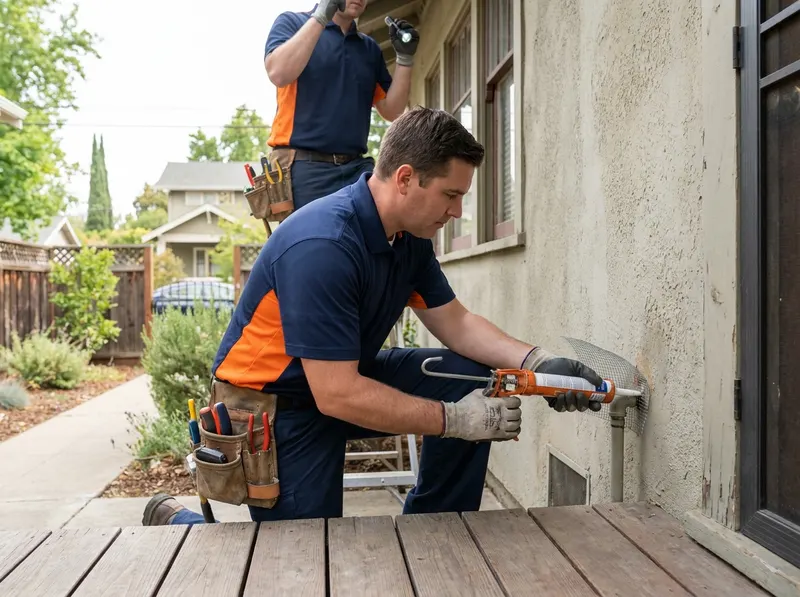
Rodent exclusion addresses structural vulnerability rather than relying on recurring chemical applications. In Sacramento neighborhoods like East Sacramento, Land Park, and the Fab 40s, mature tree canopies directly overhang rooflines, granting roof rats direct transit to fascia gaps, attic louvers, and chimney flashings. Conversely, properties across Natomas, Pocket-Greenhaven, and river-adjacent tracts face Norway rat pressure moving inland from drainage channels and agricultural borders, targeting crawl space crawl-vents, foundation settling gaps, and drain connections. Eliminating rodents requires a mechanical barrier strategy; snap traps and poison boxes fail when the home leaves structural routes open.
Technicians conduct an exhaustive perimeter survey measuring entry points down to six millimeters, which corresponds to the skull clearance of an adult mouse. Exclusion technicians apply galvanized twenty-gauge steel mesh, custom metal break-metal flashing, and concrete mortar across sub-area screens, crawl space access covers, roof ridge vents, and pipe chases. Internal abatement relies on mechanical snap and multi-catch containment placed in active runway zones. This containment model bypasses broadcast anti-coagulant baits, which prevents contaminated rodent carcasses from decaying inside inaccessible drywall bays or exposing residential domestic animals to secondary toxicity.
Decision thresholds depend on the age of the structure and past pest history. Standalone trapping fits minor, temporary basement penetrations where the building envelope remains solid. Whole-home exclusion becomes necessary when attics show gnawed electrical wiring, urine-marked runway tracks, or contaminated ductwork insulation across older raised-foundation bungalows in Midtown, Curtis Park, Tahoe Park, and Oak Park. Physical exclusion involves a higher upfront repair investment than monthly poison bait boxes, but it permanently eliminates the structural ingress pathway, removing the need for recurring locked chemical contracts.
Every job gets a firm, written price after a free on-site visit.
Tell us about your rodent exclusion and abatement job in Sacramento and we'll send a clear, written quote, usually the same day.
 Tavion Pest Defense